
Labyrinth Psychiatry Group · Published · Prepared by the practice’s editorial team · Dr. Savatta’s view is quoted from his note of ; his clinical review of this article is pending · Facts checked
The short answer
No, 5-MeO-DMT therapy is not available in New Jersey, and it will not be soon. Mebufotenin, the medical name for 5-MeO-DMT, is not approved by the FDA, is a Schedule I controlled substance under federal law, and is given today only in research. As of November 11, 2026, ClinicalTrials.gov lists no Phase 3 trial of it.
What is new is the evidence. On October 26, 2026, JAMA published the largest controlled trial of mebufotenin so far: 193 adults with depression that had not improved after 2 to 5 antidepressants. One spray of the active doses helped about a third of them, against about one in eight on a very low dose.
What the JAMA trial found
The trial tested BPL-003, a nasal spray of mebufotenin made by Beckley Psytech, an AtaiBeckley company that paid for the study. People were randomly given one spray of 8 mg, 12 mg, or 0.3 mg. The 0.3 mg dose was a very low comparison dose, not a true placebo. Anyone taking antidepressants stopped them first, under supervision, and everyone had psychological support before, during and after the dose.

Two terms help read the results:
- Response means a person’s depression score dropped by at least half.
- Remission means the score fell low enough that few or no symptoms were left (10 or less on the 60-point MADRS rating scale).
| Group | People | Responded, day 29 | Remission, day 29 | Responded, day 57 | Remission, day 57 |
|---|---|---|---|---|---|
| 8 mg, one spray | 46 | 34.8% | 26% | 28.3% | 26.1% |
| 12 mg, one spray | 73 | 34.2% | 18% | 31.5% | 19.3% |
| 0.3 mg comparison dose | 74 | 12.2% | 8% | 10.8% | 8.1% |
Sources: day-29 remission from the JAMA research summary; day-29 response from HMP Global’s summary; day-57 rates from Medical Republic, all reporting the same paper.
- Fast. Both active doses did better than the comparison dose from day 2 through day 57, the last visit.
- Short. 85% of the 8 mg group and 78% of the 12 mg group were judged ready to leave within 2 hours. No one actually left that early: the protocol required at least 4 hours.
- Side effects. Reported by 76.1% (8 mg), 84.9% (12 mg) and 73.0% (0.3 mg); 99.7% were mild or moderate. The most common were headache (29.5% of all participants), nausea (23.8%) and pain where the spray went in (15.5%). One person on 12 mg had two severe panic attacks judged to be caused by the treatment.
- A second dose. In an open-label follow-up with no comparison group, people who took a second 12 mg dose eight weeks later did better again: of 60 who had an active dose first, 63% were responding and 48% were in remission eight weeks after it. These are company figures, not peer-reviewed.
Dr. Savatta’s view, in two parts
Dr. Salvatore G. Savatta shared the trial with us on November 11, 2026. His position has two parts, and the trial shows why both matter.
1. More treatments are still needed
Every treatment for depression leaves some people without enough relief, and some people cannot have a given treatment for medical reasons. Two examples from treatments Labyrinth offers:
- SPRAVATO (esketamine): the FDA label rules it out for people with an aneurysm or aneurysmal blood vessel disease, an arteriovenous malformation, a past bleed inside the brain, or an allergy to esketamine or ketamine (SPRAVATO in Cranford).
- TMS: it is generally not used for people with metal or electronic devices in or near the head, such as deep brain stimulators, cochlear implants, aneurysm clips or stents, implanted heart devices close to the coil, or head tattoos made with metallic ink (TMS therapy).
Mebufotenin would not help everyone either. On the 8 mg dose, about 65 in 100 people had not responded by day 29.
2. Impressive, if it holds up in larger placebo-controlled studies
A single dose after which about a third of people had responded at four weeks, and about 3 in 10 at eight weeks, is a striking result. These questions still need larger trials:
- No true placebo. The comparison was a very low dose of the same drug. The Phase 3 trials AtaiBeckley described compare with a placebo. The company told the SEC that Phase 3 activities began in the second quarter of 2026; no Phase 3 trial is listed yet.
- People could tell. Most participants and on-site clinicians guessed which dose they had, a common problem in psychedelic trials. Blinding held up better among the remote raters who scored depression.
- Size. The 8 mg group had 46 people, fewer than planned, after a change in how people were assigned.
- Who paid. The drug’s developer funded the trial, and its employees helped design it, analyze it and decide to publish.
What the experts flagged
In an editorial in the same issue of JAMA, psychiatrist Dr. Chittaranjan Andrade called two findings striking: one dose kept depression scores about a third lower for eight weeks, and most people were ready to leave within two hours. He also noted that:
- The average patient improved by only about 30%; he wrote that “the antidepressant effect was incomplete.”
- Response and remission rates fell below those usually seen with ketamine and electroconvulsive therapy (ECT).
- Participants had failed a median of two antidepressants, so they were not the most treatment-resistant patients.
- The trial could not test whether the drug eases suicidal thinking, because people with recent suicidal intent were excluded.
- Long-term safety, including lasting visual changes after psychedelics, still has to be studied.
Who the trial did not include. It excluded people with PTSD, bipolar or psychotic disorders, any personality disorder, a parent, sibling or child with schizophrenia or bipolar disorder, suicidal thoughts with intent in the past year, or no response to ketamine or ECT in the past. Nearly 90% of participants were white. If you are in one of these groups, these results do not tell you how you would do.
The other mebufotenin medicine: GH001
A second company, GH Research, is testing an inhaled form of mebufotenin called GH001. Its Phase 2b trial in 81 people with treatment-resistant depression used a true placebo, and was published in JAMA Psychiatry in March 2026.
- 57.5% of people on GH001 were in remission on day 8, against 0% on placebo.
- In the open-label follow-up, 73% were in remission at 6 months, with about 4 treatments on average. That part had no comparison group.
- The company reports a median experience of about 11 minutes, with 99% of people ready to leave within 1 hour.
The FDA lifted its hold on U.S. testing in January 2026, and GH Research says it aims to start Phase 3 in 2026. For both medicines side by side, see the mebufotenin guide on Advanced Depression Care.
Where mebufotenin stands: the timeline
| Date | What happened | Source |
|---|---|---|
| October 2025 | The FDA grants BPL-003, the mebufotenin nasal spray, Breakthrough Therapy designation for treatment-resistant depression. The designation speeds development; it is not an approval. | Psychiatric Times |
| January 5, 2026 | The FDA lifts its hold on U.S. testing of GH001, a second mebufotenin medicine that is inhaled. | GH Research |
| March 3, 2026 | After meeting the FDA, AtaiBeckley lays out two Phase 3 trials of BPL-003, both compared with a true placebo. | AtaiBeckley |
| March 25, 2026 | GH001’s placebo-controlled Phase 2b trial is published in JAMA Psychiatry. | GH Research |
| August 11, 2026 | AtaiBeckley tells the SEC that Phase 3 activities for BPL-003 began in the second quarter of 2026. No Phase 3 trial is listed on ClinicalTrials.gov yet. | AtaiBeckley 10-Q |
| September 11, 2026 | Eli Lilly completes its purchase of AtaiBeckley; BPL-003 becomes a Lilly program. | Lilly |
| October 26, 2026 | JAMA publishes the BPL-003 Phase 2b trial in 193 adults with treatment-resistant depression, the study Dr. Savatta shared. | JAMA |
| November 11, 2026 | ClinicalTrials.gov lists no Phase 3 trial of either mebufotenin medicine. | ClinicalTrials.gov |
| Early 2029 | When AtaiBeckley expected its Phase 3 results, in May 2026, before Lilly bought the company. An FDA decision, and rescheduling by the DEA, would come after that. | AtaiBeckley |
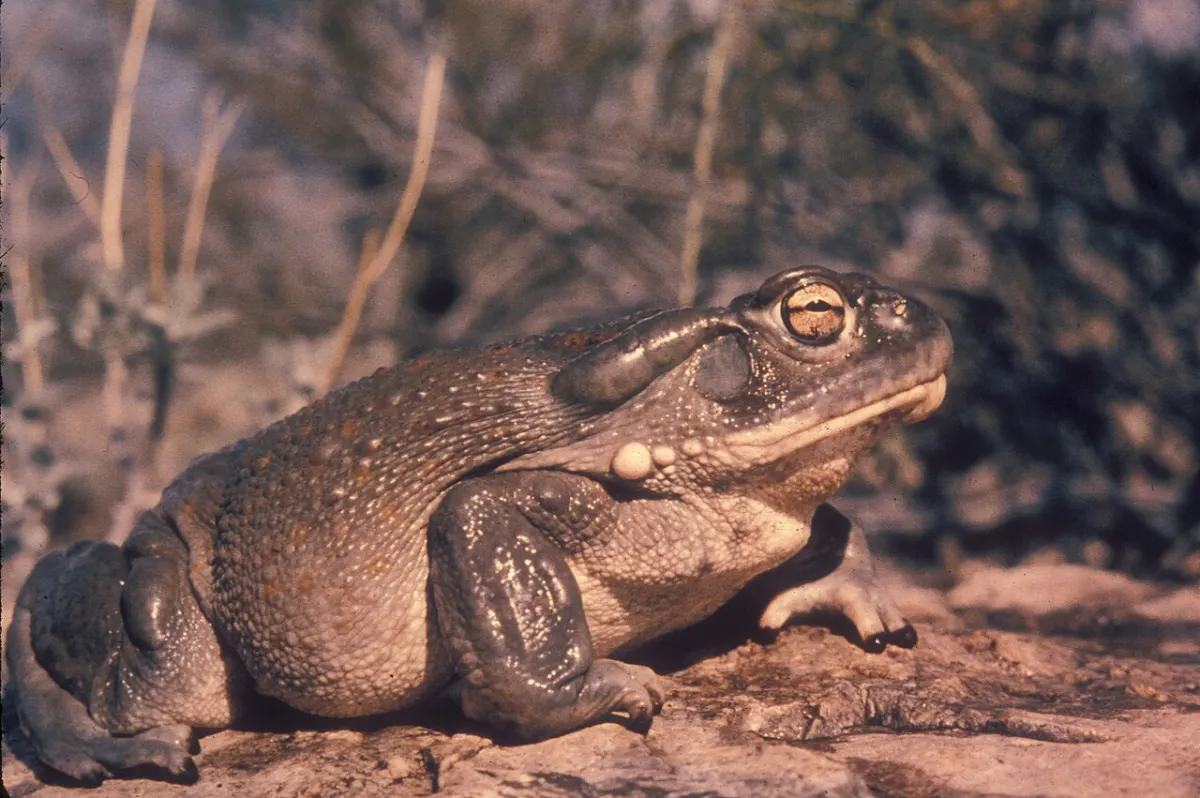
Toad secretion and retreats are not the studied medicine
5-MeO-DMT is found in some plants and in the secretion of at least one toad species. Outside trials, people smoke dried toad secretion at retreats, without medical screening. That is not the measured, clinician-given dose tested in the JAMA trial, where people were screened, stopped other medicines under supervision and stayed under observation for hours.
If someone has taken a substance like this and is very unwell, call 911. For help with substance use, SAMHSA’s National Helpline is free, confidential and open 24/7 at 1-800-662-HELP (4357).
If your depression has not responded, what you can do in New Jersey now
- Get a full evaluation. How many treatments you have tried, at what dose and for how long shapes what makes sense next.
- Ask about treatments available today. For depression that has not responded to antidepressants, Labyrinth offers TMS therapy and SPRAVATO (esketamine) in Cranford. TMS vs. SPRAVATO compares the two, and insurance and access covers coverage.
- Look at trials with care. Search ClinicalTrials.gov; on November 11, 2026 it listed one recruiting BPL-003 study (NCT05660642). Trial rules can exclude people who recently had other treatments.
- Do not stop your medicine on your own. The trial stopped antidepressants under supervision; the authors note that stopping can bring withdrawal symptoms or a return of depression.
For psilocybin, the psychedelic closest to FDA review, see where FDA approval and New Jersey’s law stand.
Mebufotenin at Labyrinth Psychiatry Group
Labyrinth does not offer mebufotenin, and no clinic can outside research. Dr. Savatta sees more treatments as necessary and calls the single-dose response rates very impressive, if they hold up in larger placebo-controlled studies. This page will be updated as the Phase 3 trials, the FDA and the DEA act.
If your depression has not responded to treatment, the practice can evaluate you for the options available now at 11 Commerce Drive, Lobby Floor, Cranford, NJ 07016. Call 908-336-1187 or use the appointment request form; office staff follow up to arrange a time. For more, see treatment-resistant depression.
Questions people ask about 5-MeO-DMT and depression
Is 5-MeO-DMT therapy legal in New Jersey?
Not as a treatment you can book. Under federal law 5-MeO-DMT (mebufotenin) is a Schedule I controlled substance, listed in 21 CFR 1308.11, and no mebufotenin product is FDA-approved. Today it is given only inside approved research studies. New Jersey’s 2026 psilocybin law funds hospital research on psilocybin; it does not cover 5-MeO-DMT. This article does not cover state possession laws.
What is mebufotenin?
Mebufotenin is the medical name for 5-MeO-DMT (5-methoxy-N,N-dimethyltryptamine), a fast, short-acting psychedelic. BPL-003, the nasal spray in the October 2026 JAMA trial, is a synthetic form called mebufotenin benzoate. GH001 is a different mebufotenin medicine that is inhaled.
What does 5-MeO-DMT do in the brain?
It acts on two serotonin receptors, 5-HT1A and 5-HT2A. After the nasal spray, its effects peak at about 8 to 15 minutes and are back to baseline after 45 to 60 minutes, Medical Republic reported on November 5, 2026, from the JAMA paper.
Is mebufotenin FDA approved?
No. As of November 11, 2026, neither BPL-003 nor GH001 is approved. AtaiBeckley told the SEC in August 2026 that Phase 3 activities for BPL-003 began in the second quarter of 2026, but ClinicalTrials.gov lists no Phase 3 trial of either medicine yet. BPL-003 has Breakthrough Therapy designation, which speeds development but is not an approval.
When could mebufotenin be available?
Not for years. In May 2026, before Eli Lilly bought it, AtaiBeckley expected Phase 3 results for BPL-003 in early 2029. After any positive results, the FDA would have to approve it and the DEA would have to reschedule it before a clinic could offer it.
Is 5-MeO-DMT safe?
In the JAMA trial, where a trained clinician gave one measured dose and people stayed at least 4 hours, 99.7% of side effects were mild or moderate; the most common were headache, nausea and pain where the spray went in. One person had two severe panic attacks. No suicidal behaviour was recorded; the suicidal thoughts reported in the active-dose groups came without intent, in people who had had them before (Medical Republic, November 5, 2026). That is not the same as using it outside a study: smoked toad secretion sold at retreats is unmeasured and taken without medical screening.
How is mebufotenin different from psilocybin and SPRAVATO?
Mebufotenin’s effects are short: most people in the trial were judged ready to go home within 2 hours. Psilocybin and LSD sessions need supervision for 4 to 12 hours, and psilocybin is also not approved yet. SPRAVATO (esketamine) is FDA-approved and available now for treatment-resistant depression, given in certified settings with at least two hours of observation, usually over a series of visits.
How much does 5-MeO-DMT therapy cost, and does insurance pay for it?
There is no approved 5-MeO-DMT treatment, so there is no medical price or insurance coverage to compare. Retreats that sell it operate outside FDA-approved care. For the treatments available now, see Labyrinth’s insurance and access page, or ask the office about coverage for TMS and SPRAVATO.
Can I join a mebufotenin clinical trial?
Possibly, but check each study’s rules. On November 11, 2026, ClinicalTrials.gov listed one recruiting BPL-003 study, an open-label Phase 2 study in treatment-resistant depression (NCT05660642). We did not check where it enrolls. Trials set strict rules; the JAMA trial excluded people who had not responded to ketamine or ECT and required stopping antidepressants first, so talk with your psychiatrist before applying.
Does Labyrinth Psychiatry Group offer 5-MeO-DMT or mebufotenin?
No. No clinic can offer it outside research, and Labyrinth does not offer it. For depression that has not responded to treatment, the practice offers options available now, including TMS and SPRAVATO in Cranford.