
Adult ADHD care · Cranford, New Jersey
Adult ADHD Specialist in Cranford, NJ
Evaluation and ongoing treatment for adults with ADHD at a psychiatrist-led practice in Union County. The team looks at attention together with mood, anxiety, sleep, and substance use before recommending treatment.
ADHD in adults
Common, and often found late.
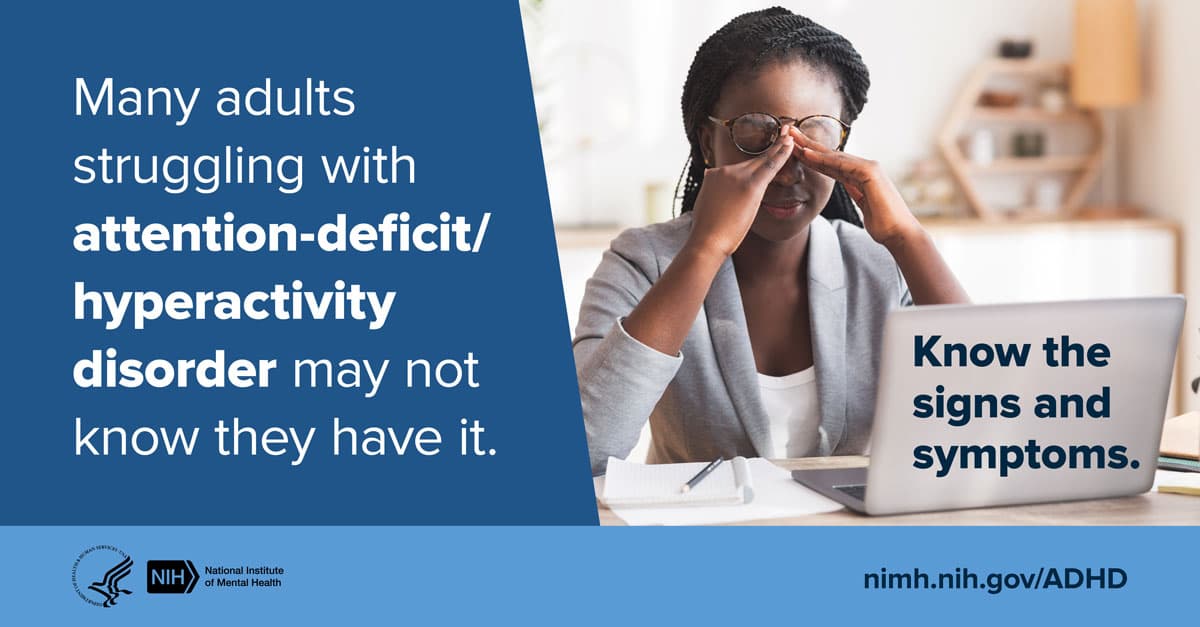
Many adults come in after years of missed deadlines, unfinished projects, or feeling scattered, and only then learn the pattern has a name. National survey data show how often that happens:
- 6.0% of US adults had a current ADHD diagnosis in late 2023, about 15.5 million people.
- About half of those adults were diagnosed at age 18 or older, not in childhood.
- About a third were not receiving any ADHD treatment.
- 71.5% of adults taking a stimulant had trouble filling a prescription because the medication was not available.
Source: CDC, 2024, from a national survey taken in October and November 2023.
ADHD also travels with other conditions. According to NIMH, it often occurs alongside sleep problems, anxiety, or depression, which can make each harder to diagnose and treat. That is why the evaluation looks at the whole picture instead of attention alone.
From the American Psychiatric Association
What ADHD is, in two minutes.
The professional association for psychiatrists explains the symptoms, the three types, and why an evaluation is the first step.
How an evaluation works
From the first request to a treatment plan.
- 01
Send a request or call
Use the request form or call the office. Staff contact you to arrange the evaluation; a request alone does not book an appointment.
- 02
The evaluation
The first evaluation takes one hour. A clinician asks how attention, organization, and restlessness affect your work, relationships, and routines today, and what school and home were like when you were young.
- 03
The rest of the picture
Mood, anxiety, sleep, alcohol and substance use, medical history, and current medications are reviewed, because each can look like ADHD or change which treatment is safe.
- 04
Diagnosis and a plan
You hear what the evaluation found and which options fit: medication, therapy, or both. Nothing is decided in advance.
- 05
Follow-up visits
Treatment is adjusted over several visits, based on how symptoms, side effects, and daily functioning change. For appropriate patients, the clinician uses the ASRS (Adult ADHD Self-Report Scale) questionnaire at follow-up visits to track symptoms; it is not part of the first evaluation.
ADHD testing
What an ADHD evaluation is, and what it is not.
According to the CDC, there is no single test that diagnoses ADHD. The diagnosis comes from a clinician’s evaluation of your history and current symptoms, and of how much they get in the way at work, at home, and with other people.
- A psychiatric evaluation is how ADHD is diagnosed and treated at Labyrinth. It also checks for conditions that can look like ADHD, such as depression, anxiety, or sleep problems.
- Neuropsychological testing is a separate, longer set of cognitive tests, used for questions such as a learning disability. The practice does not list it among its services; ask the clinician whether your situation needs it.
To make the first visit count, bring:
- A list of every medication and supplement you take, with doses
- Names of ADHD or other psychiatric medications you have tried, and why you stopped
- Any earlier ADHD testing, psychiatric records, or school reports you still have
- Your insurance card, or questions about self-pay
Treatment options
Medication, therapy, or both.
Standard ADHD treatment includes medication and psychosocial care such as cognitive behavioral therapy, according to NIMH. Which mix fits depends on your symptoms, your health, and your goals.
Stimulant medication
The practice lists stimulant medications among its ADHD treatments. The dose is started and adjusted over follow-up visits, based on benefit and side effects.
Non-stimulant options
The practice lists specialized antidepressants among its ADHD treatments; they may suit people who cannot take a stimulant or who also have depression or anxiety.
Therapy
Cognitive behavioral therapy and counseling work on planning, time, follow-through, and the stress ADHD adds to work and relationships.
Combined care
Many adults use medication and therapy together. Your plan is built from your goals and adjusted over time.
New Jersey telehealth rules
What the law requires for ADHD stimulants.
Most ADHD stimulants are Schedule II controlled substances. Under a 2026 New Jersey law, an adult who is prescribed one through telehealth needs:
- A first evaluation, in person or by telehealth
- An in-person visit within 30 days, if that first evaluation was by telehealth
- A visit or telehealth contact every three months while you take the stimulant
- An in-person visit at least once a year
About half of adults with ADHD have used telehealth for their care (CDC, 2024). Your clinician explains how these rules apply to your own plan.
In-person visits
A short drive for the visits the law requires.
In-person visits take place at 11 Commerce Drive, Lobby Floor, Cranford, NJ 07016, in Union County. The office is close to Westfield, Garwood, Clark, Kenilworth, and Union.
Stimulant shortages are still a problem: in the same CDC survey, 71.5 percent of adults taking a stimulant had trouble filling a prescription. Tell your clinician if your pharmacy cannot fill yours, so the plan can be adjusted.
When depression or anxiety come too
One practice for ADHD and mood.
Depression and anxiety often come with adult ADHD, and they change which treatment is safe to start first. The practice evaluates and treats depression and anxiety as well, including depression that has not improved with medication, where TMS or SPRAVATO may be options. You do not have to split your care between offices.
Who you will see
Psychiatrists, nurse practitioners, and therapists.
Evaluations and medication care are provided by the practice’s psychiatrists and psychiatric nurse practitioners, and therapy by its licensed social workers and therapists. The practice is led by Dr. Salvatore G. Savatta, who is board certified in adult psychiatry.
Listed insurance plans
Plans the practice lists.
- Aetna
- Blue Cross Blue Shield
- Cigna
- Medicare
- TRICARE
- UnitedHealthcare / Oxford
This list is not a guarantee of coverage. Confirm participation and benefits with the practice and your plan. Insurance and access
Common questions
Questions adults ask about ADHD care.
Can adults be diagnosed with ADHD for the first time?
Yes. In a 2023 national survey, about half of adults with a current ADHD diagnosis were diagnosed at age 18 or older. An adult evaluation still asks about childhood, because ADHD symptoms usually begin early even when no one named them.
Do I need ADHD testing before I can be treated?
There is no single test that diagnoses ADHD. A psychiatric evaluation diagnoses it from your history, current symptoms, and how they affect daily life. Formal neuropsychological testing is a separate, longer assessment that some situations call for; the practice does not list it among its services, so ask the clinician whether you need it.
Can I get ADHD medication through telehealth in New Jersey?
For adults, New Jersey allows the first evaluation for a Schedule II stimulant to happen by telehealth, but an in-person visit is then required within 30 days. After that, you need a visit or telehealth contact every three months and an in-person visit at least once a year for as long as you take the stimulant. The Cranford office handles the in-person visits.
What if I also have anxiety or depression?
That is common, and the evaluation looks at all of it together. The practice also treats depression, including depression that has not improved with medication, so both conditions can be managed in one place.
How long is the first ADHD evaluation?
The first evaluation takes one hour. It covers your current symptoms, your history, and the rest of your health, and ends with what the clinician found and which treatment options fit.
Will I fill out a rating scale such as the ASRS?
Not at the first evaluation. For appropriate patients, the clinician uses the ASRS (Adult ADHD Self-Report Scale) questionnaire at follow-up visits to track how symptoms change with treatment.
Do you treat children with ADHD?
No. Labyrinth Psychiatry Group treats adults only. For a child or teenager, ask your pediatrician for a referral to a child and adolescent specialist.
Will my insurance cover an ADHD evaluation?
It depends on your plan. The practice lists Aetna, Blue Cross Blue Shield, Cigna, Medicare, TRICARE, and UnitedHealthcare / Oxford; confirm your own benefits with the office and your plan before the visit.
Service details
What to know about this care.
Attention-deficit hyperactivity disorder (ADHD), which affects both children and adults, leads to continuous impulsive behaviors and serious difficulty paying attention. At Labyrinth Psychiatry Group in Cranford, New Jersey, adult patients can receive personalized, innovative ADHD treatment plans based on their specific symptoms. Call Labyrinth Psychiatry Group to schedule a consultation today. Telehealth visits are also available.
What are the symptoms of ADHD?
Attention-deficit hyperactivity disorder (ADHD) is a chronic mental health condition that often starts in childhood, then continues into adulthood. The symptoms and behaviors described below characterize ADHD.
ADHD in children
Children who have ADHD are known for being inattentive, overly active, and even impulsive. These children may:
- Be easily distracted
- Blurt out answers
- Talk a lot or talk fast
- Have difficulty paying attention in class
- Make careless mistakes on schoolwork
- Always seem on-the-go and in motion
ADHD in adults
When adults have ADHD, the same symptoms that affect children start trickling into adult activities and responsibilities. If you have ADHD, you may:
- Have difficulty coping with stress
- Experience frequent mood swings
- Find it difficult to follow through or complete tasks
- Be a poor planner or have poor time management skills
If any of these symptoms sound familiar to you, it’s important to have an evaluation and start treatment before ADHD seriously starts disrupting your life.
When should I see a doctor for ADHD?
It’s normal for all children and adults to experience some symptoms of ADHD during various stages of life. But if ADHD-related behaviors are starting to affect you on a regular basis, schedule an exam at Labyrinth Psychiatry Group. Their team can evaluate you if your ADHD is associated with:
- Decreased work or school performance
- Broken or damaged relationships
- Dangerous or impulsive behaviors
- Anxiety or depression
- Learning disabilities
They spend time evaluating you as an individual and design your treatment plan based on your specific needs.
How is ADHD treated?
Treating ADHD often involves combining the right type of medication with regular counseling to help correct behaviors or ways of thinking. Your ADHD treatment plan at Labyrinth Psychiatry Group may include:
- Stimulant medications
- Specialized antidepressants
- Psychological counseling
- Cognitive behavioral therapy
Treating ADHD takes time and dedication to your treatment plan with your provider. But ongoing treatments and therapies can open doors for improved learning, enhanced work performance, and even more stable relationships. Labyrinth Psychiatry Group even offers convenient telehealth appointments to help monitor your progress and answer any questions you may have.
Schedule your ADHD evaluation at Labyrinth Psychiatry Group by calling the office today.
We offer Spravato Therapy, also known as Eskatimine. Call us to book your appt today.