
Off-label TMS · Cranford, New Jersey
TMS for cognitive decline: an honest, off-label option.
Labyrinth Psychiatry Group now offers repetitive TMS, off-label, for memory and thinking problems: age-related cognitive decline, mild cognitive impairment and early dementia such as Alzheimer’s disease. It is not FDA-cleared for this. The research shows a small benefit at best for some people, and we would rather you know that before you book.
Labyrinth Psychiatry Group · Published · Studies and FDA records read that day · Clinical review by Dr. Salvatore G. Savatta pending
Who this page is for
Adults worried about memory, and the families helping them.
Some older adults have mild cognitive impairment (MCI), which means more memory or thinking problems than other people their age (NIA). Others have a diagnosis of early Alzheimer’s disease, or simply notice that memory and focus are slipping.
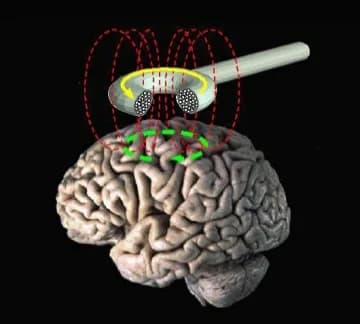
TMS uses magnetic pulses from a coil held against the scalp to stimulate brain areas involved in memory and thinking. Labyrinth already gives TMS for depression, its FDA-cleared use. It has now started offering TMS for cognitive decline as an off-label treatment, which means using a TMS device for a purpose the FDA has not cleared it for. In our view it can offer a mild benefit for some people. We do not want anyone to expect a great improvement.
This page is about memory loss with aging, MCI and dementia. If your concern is brain fog or poor focus that comes with depression or anxiety, read how TMS can help cognitive function in depression instead.
What the research shows
Small studies, small gains, and one large trial where sham did as well.
| Who was studied | Study | What it found |
|---|---|---|
| Mild-to-moderate Alzheimer’s disease | Zhou 2026 (5 trials, 143 people) | A small-to-moderate improvement on the MMSE memory-and-thinking test. After treatment ended, the benefit was a trend that was not statistically significant. The authors call the benefit “modest” and say the evidence “remains limited.” |
| Mild cognitive impairment (MCI) | Lin 2026 (11 trials, 532 people) | Scores were 2.35 points higher on the MMSE and 1.31 points higher on the MoCA than with sham (pretend) treatment. Because the studies were small, the authors rate the certainty “mostly moderate.” |
| MCI and Alzheimer’s together | Pagali 2024 (143 studies, 25 trials pooled) | Better scores on three standard cognitive tests, “although with significant heterogeneity”: the studies disagreed a lot with each other. |
| MCI and Alzheimer’s, after treatment | Wang 2025 (31 trials; 9 with follow-up) | A larger effect right after treatment than at follow-up visits later on. |
| Mild-to-moderate Alzheimer’s disease | Moussavi 2024 (135 people, three sites) | People improved for up to two months after treatment, but people who had the sham coil improved about as much as those who had real TMS. |
| Mild-to-moderate Alzheimer’s disease | Koch 2022 (50 people, 24 weeks) | With TMS aimed at the precuneus, a key hub of the brain network Alzheimer’s disease mainly affects, scores on a dementia rating scale held steady while the sham group got worse. The authors say it “may slow down” decline. |
Sham treatment looks and feels like TMS but does not deliver the real stimulation, so it shows how much people improve without it. The MMSE and the MoCA are short tests of memory and thinking.
What this means for you
A mild benefit at best, for some people.
Put together, the reviews point the same way: TMS may nudge memory and thinking test scores up a little for some people with MCI or mild-to-moderate Alzheimer’s disease. The studies are small, they disagree a lot with each other, and the benefit seems smaller once treatment stops (Zhou 2026, Pagali 2024, Wang 2025). The largest trial we found saw people improve about as much with a sham coil as with real TMS (Moussavi 2024).
You may see a claim that Alzheimer’s symptoms worsened 44% more slowly with TMS. It comes from a phase 2 trial of 32 people reported by NBC News in 2024; one of the researchers co-founded the company developing that therapy, and an expert quoted in the same article called the findings “very, very preliminary” (NBC News).
So the honest goal is modest: a small, measurable improvement, or slower decline, in some people. Some people will notice no change.
Not FDA-cleared for this
The FDA’s device categories for TMS cover depression, OCD, migraine, smoking cessation and PTSD; none covers memory loss, MCI, dementia or Alzheimer’s disease (FDA database). In 2019 an FDA advisory panel voted 14 to 0 against the NeuroAD system, a TMS treatment made for Alzheimer’s disease, after its main study favored the sham group (NeurologyLive, FDA summary).
Cost and insurance
Medicare’s TMS policy for New Jersey covers TMS for severe major depression and says that all other uses of TMS are not medically reasonable and necessary (Novitas LCD L34998). Expect to pay yourself, and ask the office for the price before you decide. Check your own plan; do not assume it pays.
Safety in older adults
Across 143 studies in people with memory problems, only 2 reported seizures (4 in all), and 3 of the 4 were judged unrelated to TMS (Pagali 2024). Safety guidelines put the TMS seizure risk at about 0.03% or less, and note that some studies suggest people with depression who also have dementia or a recent stroke have a higher risk of seizures (Rossi 2021). Researchers at the National Institute on Aging have also cautioned that TMS settings worked out in young adults may have unexpected harmful effects in older people or in a brain affected by Alzheimer’s disease (Weiler 2020).
Depression and memory
Depression can cause memory problems that usually improve once it is treated (NIA). If you have both, the evaluation looks at each. TMS for depression is FDA-cleared; see TMS therapy at Labyrinth.
Who it is not for
When TMS for memory is the wrong first step.
- Memory problems whose cause has not been checked. Thyroid, kidney or liver problems, medication side effects, depression, sleep problems and low vitamin B12 can all cause memory problems, and memory problems caused by a medical condition usually go away once it is treated (NIA).
- At Labyrinth, TMS is generally not used for people with a seizure disorder or a history of seizures, epilepsy, a brain tumor, or a history of severe head injury.
- It is also generally not used with metal or electronic devices in or near the head, such as deep brain stimulators, cochlear implants, aneurysm clips or stents; an implanted pacemaker or defibrillator close to the coil; or head tattoos made with metallic ink.
- Anyone hoping for a cure or a large improvement. That is not what the research shows.
Tell the care team about your full medical history and anything metal or electronic in your body; some items can be checked and cleared. If you notice changes in your memory, talk with a doctor, who can test for the cause (NIA).

Other neurological conditions
Where the research on TMS looks more promising.
| Condition | What the research found |
|---|---|
| Arm and hand recovery after a stroke | A 2025 review of 37 study reports found better arm-movement scores with rTMS, most clearly when treatment started within six months of the stroke and in people with more severe weakness. (study) |
| Language problems after a stroke (aphasia) | A 2026 review of 26 randomized trials found that rTMS helped language recovery. (study) |
| Parkinson’s disease | A 2024 review of 15 studies found improvements in thinking scores, movement, walking and depression symptoms. (study) |
| Vascular cognitive impairment | A 2024 review of 20 trials (1,049 participants) found better scores on tests of planning and organizing (executive function). (study) |
| Primary progressive aphasia | One 2025 trial of 63 people found that six months of TMS added to language therapy was linked to better language and daily-living scores and slower decline than sham TMS with language therapy. (study) |
None of these is an FDA-cleared use of TMS (FDA database). This page does not say Labyrinth treats them; if one applies to you, ask at your evaluation.
Book now
How to start at Labyrinth.
- 01
Call or send a request
Call 908-336-1187 or use the online request form and tick “Memory concerns or cognitive decline.” Keep health details out of the online form. Family members can call the office to ask how to start.
- 02
Evaluation with a psychiatrist
The psychiatrist goes over what has changed and when, any memory testing or scans you have had, your medicines, mood and sleep, and your safety history for TMS. Bring a list of medicines and any reports from your primary care doctor or neurologist.
- 03
A plan, with honest expectations
If TMS is reasonable for you, the psychiatrist explains the schedule, the cost, and what change, if any, to expect. Studies have used schedules such as five days a week for two to four weeks, or daily sessions for two weeks followed by weekly sessions; ask which one Labyrinth would use for you.
- 04
Checking whether it helped
Ask how your memory and thinking will be measured before and after the course, so that you and your family can judge the result.
Labyrinth offers this now
Book an evaluation for memory concerns.
Call 908-336-1187 or send a request and tick “Memory concerns or cognitive decline.” The first visit is an evaluation with a psychiatrist in Cranford, not a commitment to treatment. Our new Edison office is opening soon, and we are already scheduling patients there for the new year.
Request an appointmentQuestions
TMS for memory loss and dementia: common questions.
Is TMS FDA-approved for dementia or Alzheimer’s disease?
No. The FDA has device categories for TMS for depression, OCD, migraine, smoking cessation and PTSD, and none for memory loss, mild cognitive impairment, dementia or Alzheimer’s disease (FDA product classification database, searched October 29, 2026). In 2019 an FDA advisory panel voted 14 to 0 against a TMS system made for Alzheimer’s disease. Labyrinth offers TMS for cognitive decline off-label, which means using a TMS device for a purpose the FDA has not cleared it for.
Can TMS reverse memory loss or cure Alzheimer’s disease?
Do not expect that. Reviews of the research find a small-to-moderate improvement on memory and thinking tests for some people, in small studies that often disagree with each other. In the largest trial found, people improved about as much with a sham coil as with real TMS. Labyrinth expects a mild benefit at best for some patients, not a great improvement.
Does TMS help with normal age-related memory changes?
Most of the research is in people with mild cognitive impairment or Alzheimer’s disease. Small studies in healthy older adults, such as a 2022 trial of 40 people that found better word recall after two weeks of rTMS, are too little evidence to promise a benefit. Forgetfulness is often a normal part of aging, and some memory problems have treatable causes, so start with your doctor (NIA).
Does Medicare or insurance cover TMS for memory loss?
Expect to pay yourself. Medicare’s TMS policy for New Jersey (Novitas LCD L34998) covers TMS for severe major depression and says that all other uses of TMS are not medically reasonable and necessary. Ask the office for the self-pay price before you decide. If you also have depression, TMS for depression is a separate, FDA-cleared treatment with its own coverage rules.
Is TMS safe for older adults?
TMS is generally well tolerated. A large review of 143 studies in people with memory problems found seizures reported in only 2 of them (4 seizures in all), and the authors judged 3 of the 4 unrelated to TMS. International safety guidelines put the seizure risk with TMS at about 0.03% or less, and note that some studies suggest people with depression who also have dementia or a recent stroke have a higher risk of seizures. Your psychiatrist reviews your health history before treatment.
How do I book an appointment?
Labyrinth offers this now. Call 908-336-1187 or send a request online and tick “Memory concerns or cognitive decline.” The first visit is an evaluation with a psychiatrist at 11 Commerce Drive in Cranford.