
Labyrinth Psychiatry Group · Published · FDA labels and device records read that day · Clinical review by Dr. Salvatore G. Savatta pending
The short answer
Five medicines are FDA-approved for OCD: clomipramine (Anafranil), fluoxetine (Prozac), fluvoxamine, paroxetine (Paxil) and sertraline (Zoloft). Four are SSRIs (selective serotonin reuptake inhibitors). Clomipramine is an older tricyclic antidepressant. Most people start with an SSRI. For OCD, the dose is often higher and the wait longer than for depression: NIMH says 8 to 12 weeks before symptoms begin to improve. With any one SSRI, about 40% to 60% of people improve meaningfully, according to the International OCD Foundation. If the first one does not work, there is a well-worn path of next steps, set out below.
What OCD is, and what medicine is meant to do
OCD means unwanted, repeated thoughts, urges or images (obsessions) and repeated actions or mental acts done to ease the distress (compulsions). NIMH notes that people with OCD usually spend more than an hour a day on them and cannot control them, even when they know they are excessive. About 1.2% of US adults have OCD in a given year, and 2.3% at some point in their lives.
Medicine does not cure OCD. It turns down the volume, so obsessions are less intense and rituals are easier to resist. The ADAA describes its main job as making therapy easier to do. The American Psychiatric Association calls SSRIs and ERP therapy the two first-line treatments and says severe OCD should get both at once.

The FDA-approved medicines for OCD, side by side
Each row comes from that drug’s current FDA label on DailyMed, read October 23, 2026. Doses are the label’s, for orientation only; your prescriber sets yours. On a phone, each medicine reads top to bottom.
| Medicine | Approved for OCD in | Label dosing for adults with OCD | Studies behind the approval |
|---|---|---|---|
| Clomipramine (Anafranil) Tricyclic antidepressant | Adults and children 10 and older | Start 25 mg a day, raise to about 100 mg in the first 2 weeks, then slowly up to a maximum of 250 mg a day | Two 10-week adult trials and one 8-week trial in ages 10 to 17 |
| Fluoxetine (Prozac) SSRI | Adults and children 7 and older | Start 20 mg a day; 20 to 60 mg a day recommended; never above 80 mg a day | Two 13-week adult trials and one 13-week trial in ages 7 to 17 |
| Fluvoxamine tablets SSRI | Adults and children 8 and older | Start 50 mg at bedtime, raise by 50 mg every 4 to 7 days; trials used 100 to 300 mg a day; never above 300 mg a day | Two 10-week adult trials and one 10-week trial in ages 8 to 17 |
| Fluvoxamine extended-release capsules SSRI | Adults (not evaluated in children) | Start 100 mg at bedtime, raise by 50 mg a week; never above 300 mg a day | One 12-week adult trial, plus the tablet trials |
| Paroxetine (Paxil) SSRI | Adults only | Start 20 mg a day, raise by 10 mg a week if needed; maximum 60 mg a day | Two 12-week adult trials; 40 and 60 mg a day worked in the dose-finding trial |
| Sertraline (Zoloft) SSRI | Adults and children 6 and older | Start 50 mg a day (25 mg for ages 6 to 12), raise by 25 to 50 mg a week; maximum 200 mg a day | 8- and 12-week adult trials; adults who finished two of them averaged about 185 mg a day |
Common medicines that are not FDA-approved for OCD
Doctors may still prescribe these for OCD (that is called off-label use), but OCD is not a listed use on their current labels:
- Escitalopram (Lexapro). The label lists major depression and generalized anxiety disorder.
- Citalopram (Celexa). The label lists major depression in adults.
- Paroxetine extended-release (Paxil CR). The label lists major depression, panic disorder, social anxiety disorder and PMDD.
- Aripiprazole (Abilify). The label lists schizophrenia, bipolar I mania, add-on treatment for major depression, irritability with autism, and Tourette’s.
- Risperidone (Risperdal). The label lists schizophrenia, bipolar I mania and irritability with autism.
The American Psychiatric Association still lists escitalopram among the SSRIs used for OCD. It does not recommend citalopram for OCD, because its firm dose limit is often too low for OCD.
Why OCD needs higher doses and more time
OCD tends to respond at the top of the dose range, and slowly. The International OCD Foundation says doses up to two to three times those used for depression and anxiety tend to give the most benefit. The labels show the same pattern:
- Fluoxetine. The Prozac label says 20 mg a day is enough for most people with depression, but recommends 20 to 60 mg a day for OCD, and says the full effect may be delayed until 5 weeks or longer.
- Sertraline. In two of the adult OCD trials on the Zoloft label, people who finished averaged about 185 mg a day, near the 200 mg maximum.
- Fluvoxamine. The label trials used 100 to 300 mg a day, with doses above 100 mg split into two.
What a full trial looks like
- NIMH: 8 to 12 weeks before symptoms begin to improve.
- American Psychiatric Association: improvement often takes 6 to 12 weeks; try an SSRI for at least 12 weeks, every day, at a high enough dose.
- International OCD Foundation: an adequate trial is 8 to 12 weeks, with at least 6 of them at the moderate to high doses OCD needs. Improvement can keep coming after week 12.
The IOCDF warns that many SSRI trials are called failures when the dose was too low or the trial too short. That is the first thing to check before switching.
How much it helps
In the Anafranil label’s trials, adults on clomipramine saw their OCD severity score (the Y-BOCS) fall 35% to 42% on average, while people on placebo showed no important response. For SSRIs, the IOCDF says those who respond see symptoms drop by 40% to 50% on average. Improvement, not a cure, is the usual result, and that is why medicine is so often paired with ERP.
If the first medicine doesn’t work: the usual next steps
Expert groups describe much the same sequence. This is the general order, drawn from the APA, NIMH and the IOCDF. Your psychiatrist may change the order to fit your history.
- Start an SSRI and raise it to an OCD dose. The American Psychiatric Association says SSRIs are a first-line treatment, at doses often higher than for depression.
- Give it a full trial. NIMH says 8 to 12 weeks before symptoms begin to improve. The APA says to try it for at least 12 weeks, taken every day, at a high enough dose.
- Add or step up ERP therapy. Exposure and response prevention is the other first-line treatment, and NIMH says it works even for some people who do not respond well to medication.
- Switch to a second SSRI. The IOCDF notes that people often respond to a second SSRI, though somewhat less often than to the first.
- Try clomipramine or an add-on medicine. After one or two SSRI trials, the IOCDF lists switching to clomipramine or adding a second medicine, most often a low-dose antipsychotic.
- Ask about TMS. Several TMS systems are FDA-cleared as an add-on treatment for adults with OCD, alongside medicine, therapy or both.
Clomipramine: effective, with more to watch
According to the IOCDF, clomipramine was the first medicine FDA-approved for OCD. It says head-to-head trials found it no more effective than SSRIs for adults, but it can work for some people SSRIs did not help. It has more side effects. The Anafranil label lists dry mouth, constipation, nausea, sleepiness, tremor, dizziness, sweating, weight gain and sexual side effects among the most common. It also names seizures as the most significant risk: about 0.64% of people had one by 90 days and 1.45% by one year, at doses up to 300 mg a day. The IOCDF advises blood-level checks and regular EKGs for people taking it.
Add-on medicines (augmentation)
Adding a second medicine to an SSRI is common when one or two SSRI trials help only partly. The IOCDF says the best-studied add-ons are low doses of the antipsychotics aripiprazole and risperidone, and that about one in three people who did not respond to an SSRI alone respond when one is added. These are off-label: OCD is not a listed use on the Abilify or Risperdal labels. Antipsychotics alone, without an SSRI, do not treat OCD. Other add-ons under study include memantine, N-acetylcysteine, lamotrigine and topiramate.
Ondansetron, an anti-nausea medicine, is another add-on in research. The IOCDF says numerous placebo-controlled trials found that adding ondansetron or granisetron to an SRI helped some people who had not responded to the SRI alone. In a trial reported in 2025 by the Brain & Behavior Research Foundation (51 people finished; 24 mg a day for 4 weeks), ondansetron did not lower OCD severity overall compared with placebo, but people with OCD who were also taking an SRI improved significantly more. Its FDA label covers only the prevention of nausea and vomiting, so any OCD use is off-label.
Other antidepressants come up too. ADAA experts note that SNRIs, such as venlafaxine, are sometimes considered when SSRIs do not help or cause hard side effects, though the evidence for them in OCD is not as strong.
One thing the ADAA says not to rely on: sedatives such as benzodiazepines. They may calm anxiety quickly, but they can be habit-forming and can undercut what ERP teaches.
ERP therapy, the other first-line treatment
Exposure and response prevention (ERP) is a type of cognitive behavioral therapy. You face the things that trigger obsessions, in planned steps, and practice not doing the ritual. NIMH says ERP reduces compulsions even for some people who do not respond well to medication. The APA says mild to moderate OCD can be treated with ERP, an SSRI or both, and severe OCD with both together. Medicine and ERP are partners, not rivals: the medicine often makes ERP easier to start.
TMS for OCD: the next step after medicine and therapy
Transcranial magnetic stimulation (TMS) uses a magnetic coil held against the head to stimulate brain areas linked to OCD. You stay awake, nothing is implanted and no anesthesia is used. In 2018 the FDA permitted the first TMS system for OCD, and NIMH notes that in 2022 the clearance was extended to standard TMS devices. In the trial behind the first clearance (100 patients who stayed on their usual OCD treatment), 38% responded to real TMS versus 11% to a sham device. The most common side effect was headache, in about the same share of both groups.
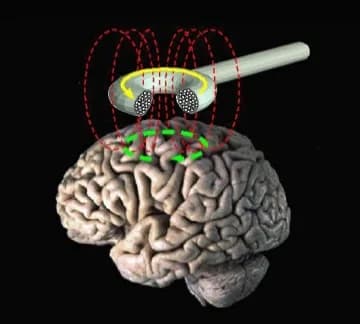
These are the TMS systems with an FDA record for OCD, found in the FDA’s 510(k) and De Novo databases under product code QCI. Each is cleared as an add-on for adults with OCD, not as a replacement for medicine or therapy. The list includes BrainsWay’s deep TMS and systems from other makers, such as NeuroStar (K212289, 2022); NIMH describes the 2022 clearance as extending OCD use to standard TMS devices.
What a course looked like in the trial behind the first clearance, per the FDA decision summary: sessions every weekday for 6 weeks, a follow-up visit 4 weeks later, and, before each session, up to 5 minutes of tailored symptom provocation to activate the OCD circuits. People stayed on their usual OCD treatment, at a stable dose for 2 months before the trial.
| Year | Maker and system | FDA record |
|---|---|---|
| 2018 | BrainsWay (Deep TMS System) | DEN170078 |
| 2019 | BrainsWay (Deep TMS) | K183303 |
| 2020 | MagVenture | K193006 |
| 2022 | Neuronetics (NeuroStar) | K212289 |
| 2023 | Teleemg (CloudTMS) | K221129 |
| 2023 | Neuronetics (OCD MT Cap) | K231350 |
| 2023 | Teleemg (CloudTMS Edge) | K233742 |
| 2024 | BTL Industries (BTL-99-OC) | K230657 |
| 2025 | Brain Ultimate (Ultimate rTMS) | K243459 |
Labyrinth’s TMS page lists OCD among the conditions it treats, with a course of 30 sessions for OCD, five a week. This article does not say which TMS system Labyrinth uses. The FDA’s 2018 announcement lists who should not have that device, including people with metal objects or implanted stimulators in or near the head; Labyrinth’s TMS page lists its own safety screening.
Deep brain stimulation, for the most severe cases
The FDA allows one deep brain stimulation system, Medtronic’s Reclaim, under a Humanitarian Device Exemption (2009). It is limited to adults with chronic, severe OCD who have failed at least three SSRIs, as an add-on to medicines. It is brain surgery, and NIMH calls it experimental. Labyrinth does not list it.
Safety: what every OCD medicine label warns about
- Suicidal thoughts in young people. All antidepressants carry a boxed warning. The Zoloft label, for example, says antidepressants increased suicidal thoughts and behaviors in children and young adults in short-term studies; its medication guide names people 24 and younger, especially early in treatment or after a dose change.
- Serotonin syndrome. The risk rises when two serotonin-raising medicines are combined. Tell your prescriber about everything you take, including supplements.
- Stopping. Stopping suddenly can cause discontinuation symptoms such as dizziness, irritability, nausea and electric-shock sensations. The label recommends lowering the dose gradually.
- How long to stay on it. The ADAA says treatment often lasts at least 1 to 2 years before tapering is considered. The IOCDF says relapse is common after stopping, and ERP can lower that risk.
Insurance for OCD medication visits and TMS
For what psychiatry visits, including medication follow-ups, can cost in New Jersey with and without insurance, see how much a psychiatrist costs in NJ. TMS for OCD is harder: Aetna’s TMS policy (last reviewed July 17, 2026), for example, lists obsessive-compulsive disorder among the uses for which it considers TMS experimental, investigational or unproven. Other plans set their own rules, so check yours. Labyrinth’s TMS page lists Aetna, Blue Cross Blue Shield, Cigna, Medicare, TRICARE and UnitedHealthcare/Oxford, and says the list is not a guarantee of coverage. More detail: how much TMS costs in New Jersey.
OCD medication care at Labyrinth in Cranford
Labyrinth Psychiatry Group’s OCD page describes an evaluation that looks at your symptoms, their impact and what you have already tried, before a plan is discussed. The plan may include medication management, psychotherapy (usually CBT, of which ERP is a part) and TMS, with telehealth and in-person visits. The office is at 11 Commerce Drive, Lobby Floor, Cranford, in Union County.
If you are already on a medicine for OCD and it has not done enough, bring the details: each medicine, the highest dose, how many weeks you took it, and any side effects. That history is what tells a psychiatrist whether you have had a full trial and what to try next.
Questions to bring to the evaluation
- Is my current dose in the range used for OCD, and how many weeks have I been at that dose?
- Have I had a full trial of one SSRI, or two?
- If we switch or add a medicine, what side effects and check-ups come with it?
- Could ERP therapy be added, and is it done here or by referral?
- Am I a candidate for TMS for OCD, and what would my plan need before it covers it?
- How long should I stay on the medicine once it works, and how would we taper it later?
Call 908-336-1187 or use the evaluation request form. Please keep health details, such as diagnoses, symptoms and medicines, out of the online form; bring them to the visit. Office staff follow up to arrange a time.
Questions about medication for OCD
What medications are FDA-approved for OCD?
Five: clomipramine (Anafranil), fluoxetine (Prozac), fluvoxamine, paroxetine (Paxil) and sertraline (Zoloft), according to each drug’s current FDA label. Paroxetine is approved for adults only. Fluoxetine is approved from age 7, fluvoxamine tablets from age 8, sertraline from age 6 and clomipramine from age 10. Escitalopram (Lexapro) and citalopram (Celexa) are SSRIs too, but OCD is not a listed use on their labels.
What is the best medication for OCD?
No single medicine has been shown to be best. The International OCD Foundation says head-to-head trials found the SSRIs and clomipramine about equally effective, so the choice usually comes down to side effects, other medicines you take, your past response and your preference. SSRIs usually come first because clomipramine has more side effects.
How long does OCD medication take to work?
Longer than for depression. NIMH says antidepressant treatment can take 8 to 12 weeks before symptoms begin to improve. The American Psychiatric Association says an SSRI should be tried for at least 12 weeks at a high enough dose before deciding it has not worked. The Prozac label notes that the full effect in OCD may be delayed until 5 weeks or longer.
Why does OCD need higher doses than depression?
Studies found that OCD usually responds best at higher SSRI doses. The International OCD Foundation says doses up to two to three times those used for depression and anxiety tend to give the most benefit. You can see it on the labels: the Prozac label says 20 mg a day is enough for most people with depression but recommends 20 to 60 mg a day for OCD, and adults who finished two Zoloft OCD trials averaged about 185 mg a day.
What happens if my first OCD medication doesn’t work?
First, check the basics: was the dose high enough, for long enough, taken every day? If so, common next steps are adding or stepping up ERP therapy, switching to a second SSRI, switching to clomipramine, or adding a second medicine such as a low-dose antipsychotic. The International OCD Foundation says about a third of people who do not respond to an SSRI alone respond when a low-dose antipsychotic is added. That add-on use is off-label: OCD is not a listed use on the Abilify or Risperdal labels.
Is Lexapro FDA-approved for OCD?
No. The current Lexapro label lists major depression and generalized anxiety disorder, not OCD. Prescribers sometimes use it for OCD anyway: the American Psychiatric Association lists escitalopram among the SSRIs used for OCD, and the International OCD Foundation says its use for OCD is well supported by data. Citalopram (Celexa) is not FDA-approved for OCD either, and the APA does not recommend it for OCD because its firm dose limit is often too low.
Is OCD an anxiety disorder?
Not in the current US system. The American Psychiatric Association groups OCD with the obsessive-compulsive and related disorders, alongside hoarding disorder, body dysmorphic disorder, hair-pulling and skin-picking, rather than with the anxiety disorders. SAMHSA’s DSM comparison shows the change: OCD was an anxiety disorder in the DSM-IV and moved to that new group in the DSM-5. Anxiety is still part of it, and NIMH notes it is common for people with OCD to also have an anxiety or mood disorder.
What calms OCD?
Compulsions bring short-term relief, which is why they repeat. Lasting relief comes from treatment: ERP therapy, which teaches you to face triggers without the ritual, and medication, often together. Sedatives such as benzodiazepines are not generally recommended for OCD, according to the ADAA, because they can be habit-forming and can interfere with what ERP teaches. NIMH also suggests a steady sleep schedule, regular exercise, a balanced diet and support from people you trust.
How is severe OCD treated?
With more than one treatment at once. The American Psychiatric Association says severe OCD should be treated with both an SSRI (or clomipramine) and ERP together. When that is not enough, options include add-on medicines, TMS, which several systems are FDA-cleared to provide as an add-on for adults with OCD, intensive programs, and, rarely, deep brain stimulation, which the FDA allows under a humanitarian exemption for adults who have failed at least three SSRIs.
What does an OCD episode look like?
Obsessions are repeated, unwanted thoughts, urges or images that cause distress, such as fear of germs, fear of harm, or a need for things to be exactly in order. Compulsions are what the person feels driven to do to ease that distress, such as washing, checking, counting, ordering or silently repeating words. NIMH notes that people with OCD usually spend more than 1 hour a day on these and cannot control them, even when they know they are excessive.
What are the DSM-5 criteria for OCD?
As SAMHSA summarizes the DSM-5: obsessions, compulsions or both; obsessions are recurrent, persistent, unwanted thoughts, urges or images that the person tries to ignore, suppress or neutralize; compulsions are repetitive behaviors or mental acts the person feels driven to perform to reduce distress or prevent a feared event; they take time (for example, more than 1 hour a day) or cause clinically significant distress or impairment; and they are not caused by a substance or medical condition or better explained by another mental disorder. Clinicians also note the level of insight (good or fair, poor, or absent) and whether there is a history of tics.
How do you deal with an OCD flare-up?
Flare-ups are common: NIMH says OCD symptoms often get worse during times of stress. Mayo Clinic’s self-care advice is to keep taking medicine as directed even when you feel well, keep practicing the skills learned in therapy, know your warning signs, and contact your doctor or therapist when symptoms change. NIMH adds a steady sleep schedule, regular exercise, a balanced diet and support from people you trust. If a flare-up comes with thoughts of self-harm, call or text 988.
Where can I find free or low-cost therapy for OCD?
Federally funded community health centers treat mental health needs, adjust their fees to income and family size, and serve everyone even if they cannot pay, according to HRSA. The International OCD Foundation’s Resource Directory lists more than 300 OCD support or treatment groups, and the IOCDF notes that treatment groups led by licensed clinicians are often more affordable than individual therapy. The 988 Lifeline is free for anyone in crisis.
What is an OCD support group like?
Usually a regular meeting, in person, online or by phone, of people living with OCD or related disorders, and sometimes their families. The International OCD Foundation describes support groups as a place to meet others who know how you feel and feel less alone; they are not a substitute for therapy but can add to it or help prevent relapse. Treatment groups are different: licensed clinicians deliver evidence-based OCD treatment in a group setting.
How many TMS sessions are used for OCD?
In the trial behind the first FDA clearance for OCD, sessions ran every weekday for 6 weeks, with up to 5 minutes of tailored symptom provocation before each one. Labyrinth’s TMS page describes a course of 30 sessions for OCD, five a week. Your plan depends on the system used and your evaluation.
How long do I need to stay on OCD medication?
Often a year or more. The ADAA says treatment often lasts at least 1 to 2 years before tapering is considered, and some people stay on medication long-term. The International OCD Foundation says relapse is common after stopping. Never stop suddenly: the Zoloft label recommends lowering the dose gradually, because stopping abruptly can cause discontinuation symptoms.