
Labyrinth Psychiatry Group · Published · Clinical review by Dr. Salvatore G. Savatta pending
Antidepressants are an essential part of depression treatment, taken by around 11.4 percent of American adults in 2023. They reduce symptoms by changing chemical signaling in the brain, and many people benefit from them. But depression is a complex disorder, and no single medication works for everyone.
At Labyrinth Psychiatry Group, we sometimes find that medication helps patients only partly, stops helping over time, or causes side effects that make it hard to continue. Some people try several medications, or combinations of them, without reaching the level of improvement they need.
When depression continues despite appropriate medication and therapy, it is known as treatment-resistant depression. That does not mean your depression cannot improve. It means your treatment plan may need a different approach, and TMS for treatment-resistant depression is one of the approaches we offer at both of our New Jersey offices.
Understanding how TMS works
Transcranial magnetic stimulation, or TMS, does not rely on a medication circulating through your bloodstream. Instead, it uses repeated magnetic pulses to stimulate nerve cells in specific areas of the brain involved in mood regulation.
During treatment, we position a magnetic coil against your scalp. The coil produces brief magnetic pulses that create small electrical currents in the targeted brain tissue. Repeated stimulation can influence activity within the brain networks linked to depression.
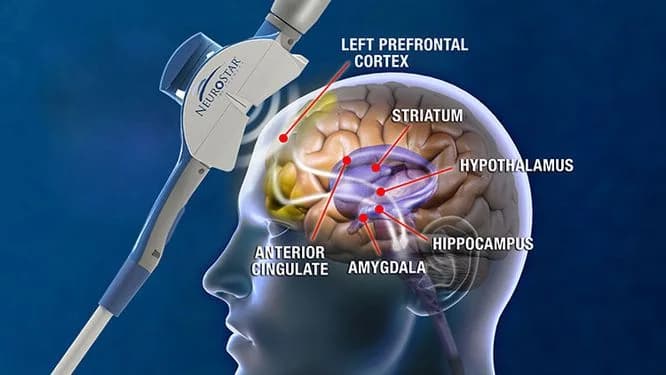
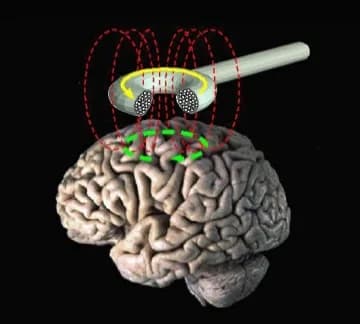
The FDA cleared TMS for treating depression in 2008, and it has become an established treatment for people whose symptoms have not responded adequately to antidepressant medication. Research continues to refine how specialists target and deliver the stimulation, but the central idea remains the same: TMS directly influences brain activity without surgery or an implanted device.
What TMS treatment involves in Cranford and Edison
TMS takes place in our office, and you remain awake and alert. You sit in a treatment chair while the magnetic coil delivers a series of pulses. You may hear clicking sounds and feel tapping or tingling on your scalp.
We typically provide five TMS sessions a week. A depression course consists of 36 sessions, with individual visits lasting about 20 to 45 minutes depending on your treatment plan. TMS does not require anesthesia or sedation, so you can usually return to your normal activities straight afterward, and you can drive yourself to and from appointments. Because a course is five visits a week for about six to eight weeks, we give TMS at both offices, 11 Commerce Drive, Lobby Floor, Cranford, NJ 07016, and 1 Ethel Road, Suite 103B, Edison, NJ 08817, so that the drive fits around work.
Because TMS is a course of treatment rather than a one-off procedure, we monitor your symptoms over time rather than judging results from a single session. Improvements can occur gradually and may include:
- A better mood
- More interest in everyday activities
- Improved motivation
- Fewer physical symptoms
Response varies, so regular check-ins with your psychiatrist remain important throughout the course.
Side effects, and who TMS is not for
Some people experience temporary scalp discomfort or headaches, especially early in treatment. According to the Mayo Clinic, these common effects are generally mild to moderate, ease shortly after a session, and lessen over time as sessions go on. Serious complications are uncommon, although TMS can, rarely, trigger a seizure; the American Psychiatric Association puts that risk at roughly one in ten thousand people. Your psychiatric evaluation helps determine whether TMS is appropriate and whether anything in your medical history could increase the risks it presents.
Tell the care team about your full medical history, your medications, and anything metal or electronic in your body. At Labyrinth, TMS is generally not used for people with:
- A seizure disorder or a history of seizures
- Metal or electronic devices in or near the head, such as deep brain stimulators, electrodes, cochlear implants, aneurysm clips, or stents
- Implanted heart devices close to the coil, such as a pacemaker or defibrillator
- Head tattoos made with metallic ink
- Certain neurological conditions, such as epilepsy, a brain tumor, or a history of severe head injury
How TMS differs from another medication trial
Trying another antidepressant can make sense, particularly when previous medications produced some benefit. But each additional medication can also bring another period of waiting, dose adjustments, and possible side effects.
TMS offers a different treatment pathway because it works through targeted brain stimulation rather than being another systemic medication. That distinction matters if you have had limited success with several antidepressants. TMS also does not have many of the whole-body effects that a 2023 analysis in The Lancet Psychiatry documents across antidepressant medications, such as:
- Nausea
- Weight changes
- Sexual side effects
- Digestive symptoms
TMS does not automatically replace medication or psychotherapy. We may recommend it alongside other treatments as part of a broader plan, and many of our patients stay on an antidepressant during and after the course.
What the research says about TMS for treatment-resistant depression
The people TMS is meant for have usually been through two or more medications without enough relief, so the research question is how it performs for them. The American Psychiatric Association reports that about half of people with depression that did not respond to medication respond to TMS, and about one in three reach full remission. Harvard Health gives a similar range, 50 to 60 percent responding and about a third in remission, and notes that relief lasts around a year on average, with some people returning for a further course. Our cost article cites the large multi-practice studies behind those figures. None of this is a guarantee for any one person, which is why we judge results over a course, not a session.
Insurance in New Jersey: what the plans want first
Nearly every plan wants proof that standard treatment has not worked before it pays for TMS. Medicare and the commercial plans the practice lists, Aetna, Blue Cross Blue Shield, Cigna, TRICARE, and UnitedHealthcare / Oxford, each publish their own rules on how many medication trials you need and how severe the depression must be. We have listed those rules, with Medicare’s 2026 New Jersey rates, in How much does TMS therapy cost in New Jersey? Bring your medication history with doses and dates; it is the document most approvals turn on, and the office verifies your plan before a course begins. The insurance and access page explains how that works.
TMS or SPRAVATO?
TMS is not the only option when medication has fallen short. SPRAVATO (esketamine) is a nasal spray taken in the office under observation, also offered at our Cranford and Edison offices. The practical differences are large: TMS is five days a week with no anesthesia and no observation period, so you can drive yourself; SPRAVATO is twice a week at first, with at least two hours of observation and no driving until the next day. Our TMS vs. SPRAVATO page compares the two side by side, and the evaluation looks at which fits your history, your week, and your coverage.
Could TMS be the next step?
Persistent symptoms do not always mean the medication itself has failed. Before recommending TMS, we review the full picture, including:
- Your diagnosis
- Past treatments
- Medication doses and how long you took each one
- Side effects
- Therapy history
- Medical conditions
- Other factors that may affect your symptoms

This evaluation helps establish whether you have had adequate medication trials and whether another diagnosis or health issue could be influencing your treatment response. It also lets us compare TMS with other approaches, including medication changes, psychotherapy, and SPRAVATO. The psychiatrists who make that call at Labyrinth are Dr. Salvatore G. Savatta and Dr. Orrin Main.
If your medication has taken you only part of the way to feeling the best you can, you do not have to keep repeating the same strategy. Contact Labyrinth Psychiatry Group to schedule an evaluation and learn whether advanced TMS therapy could offer a different path forward. Call our Cranford or Edison, New Jersey, office at 908-336-1187, or use the online form.
Questions about TMS when medication falls short
How do you know if your depression is treatment-resistant?
The usual definition is depression that has not improved enough after two adequate trials of antidepressant medication, each at a proper dose for long enough to work, along with appropriate therapy. Whether your trials were adequate is part of the evaluation: a medication stopped early for side effects, or never raised to a full dose, may not count as a failed trial, and that changes what the next step should be.
Does TMS work for treatment-resistant depression?
For many people, yes. The American Psychiatric Association reports that about half of people with depression that has not responded to medication respond to TMS, and about one in three reach remission. Harvard Health puts response at 50 to 60 percent and remission at about a third, with relief lasting around a year on average, and some people return for a further course. A response cannot be promised to any one person, which is why the decision starts with an evaluation.
What disqualifies you from TMS?
At Labyrinth, TMS is generally not used for people with a seizure disorder or a history of seizures; metal or electronic devices in or near the head, such as deep brain stimulators, cochlear implants, aneurysm clips, or stents; an implanted pacemaker or defibrillator close to the coil; head tattoos made with metallic ink; or certain neurological conditions, such as epilepsy, a brain tumor, or a history of severe head injury. Tell the care team about your full medical history and anything metal or electronic in your body; some items can be checked and cleared.
What are the side effects of TMS?
The common ones are scalp discomfort or a headache, especially in the first week, and they usually ease as sessions go on. Serious complications are uncommon; a seizure is possible but very rare, which the APA puts at roughly one in ten thousand people. TMS does not need anesthesia, so there is no recovery period, and it does not carry the whole-body effects of antidepressant medication, such as nausea, weight change, or sexual side effects.
Should I try another antidepressant first, or TMS?
If an earlier medication helped partly, another trial can make sense, and sometimes a dose or combination change is the right next step. If several adequate trials have not brought enough relief, or side effects keep stopping you, TMS is a different pathway rather than a fourth version of the same one. The evaluation compares the two for your history, and insurers have their own rules about how many trials they want documented first.
What is the difference between TMS and SPRAVATO?
Both are for depression that has not improved with medication, and Labyrinth offers both in Cranford and Edison. TMS is a magnetic treatment given five days a week for about six to eight weeks, with no anesthesia and no observation period, so you can drive yourself. SPRAVATO (esketamine) is a nasal spray taken in the office twice a week at first, with at least two hours of observation and no driving until the next day. Which one fits depends on your history, your week, and your coverage; the evaluation covers both.
Does insurance cover TMS for treatment-resistant depression in New Jersey?
Medicare and the major commercial plans the practice lists cover TMS for major depression that has not responded to medication, once the plan approves it. The plans differ on how many medication trials they want documented and how severe the depression must be. Our article on what TMS costs in New Jersey lists each plan's published rules, and the office verifies your plan before a course begins.
Where can I get TMS for depression in New Jersey?
Labyrinth Psychiatry Group and TMS Center gives TMS at 11 Commerce Drive, Lobby Floor, Cranford, NJ 07016, and at 1 Ethel Road, Suite 103B, Edison, NJ 08817. Call 908-336-1187 or send a request through the online form to start with an evaluation, and tell the office which location is closer to you.